Skip to content
LegalGuideIPTV Basics

Is IPTV Legal? The Truth Behind the Confusion (2026)

Published: Updated: 8 min read
Share:

Watch on any device — no cable needed

Start your free 24-hour trial. No credit card required.

Start Free Trial

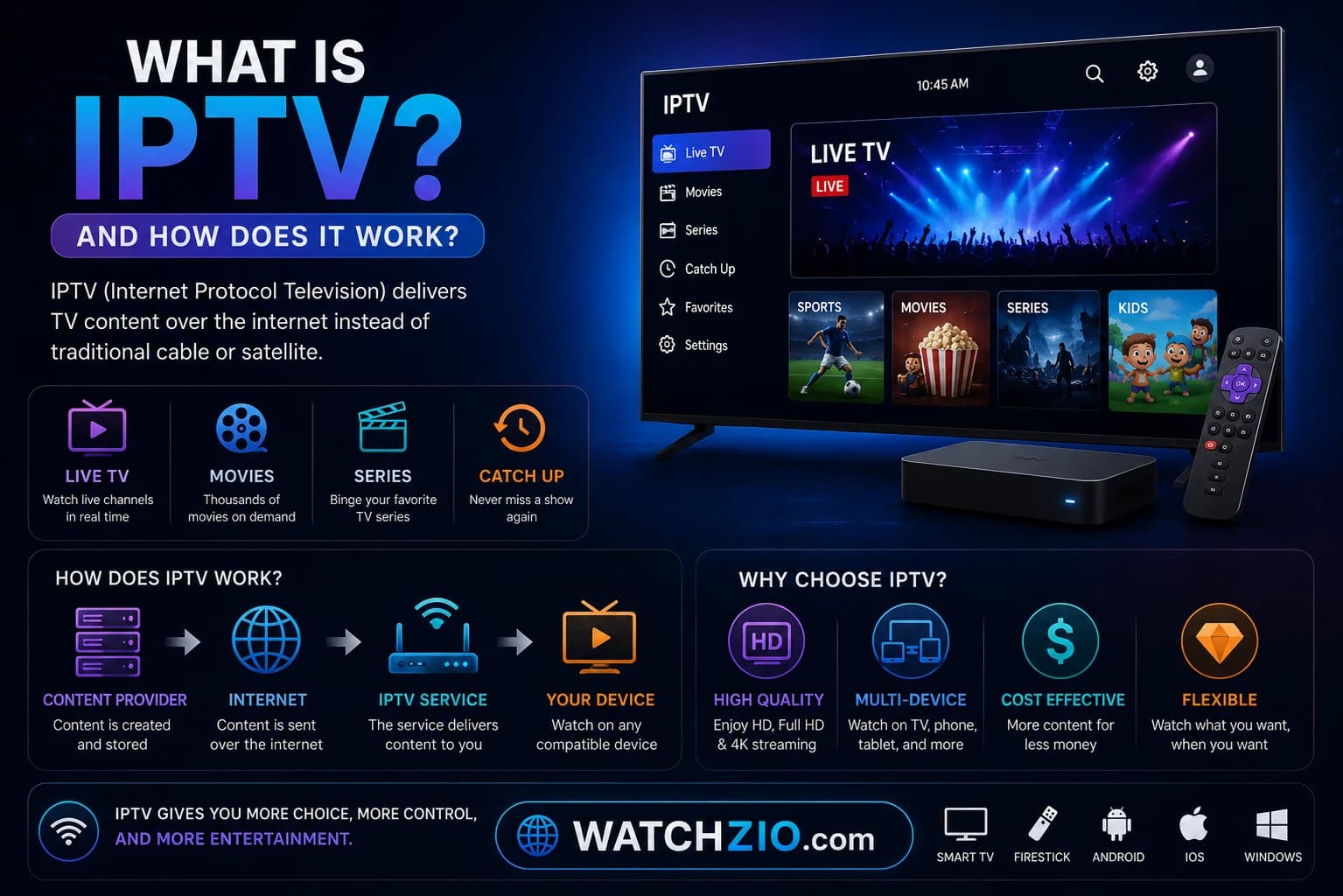
"IPTV is illegal" is one of the most repeated — and most wrong — claims on the internet. IPTV is a delivery technology, not a legal category. Every major licensed streaming service runs on it. What actually decides whether a specific IPTV service is legal has nothing to do with the technology and everything to do with one question: does the provider hold the rights to the content it streams?
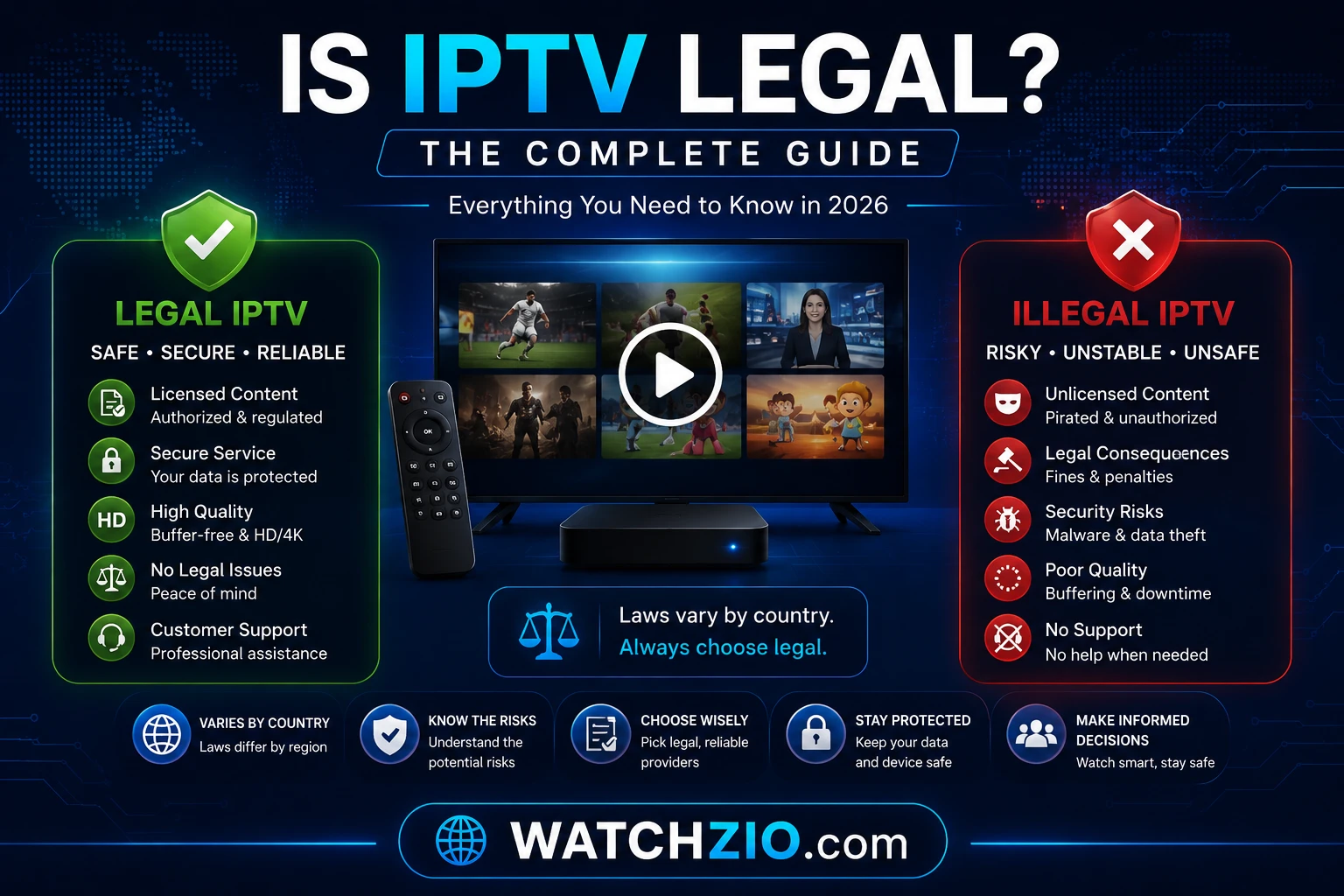
Is IPTV legal explained 2026
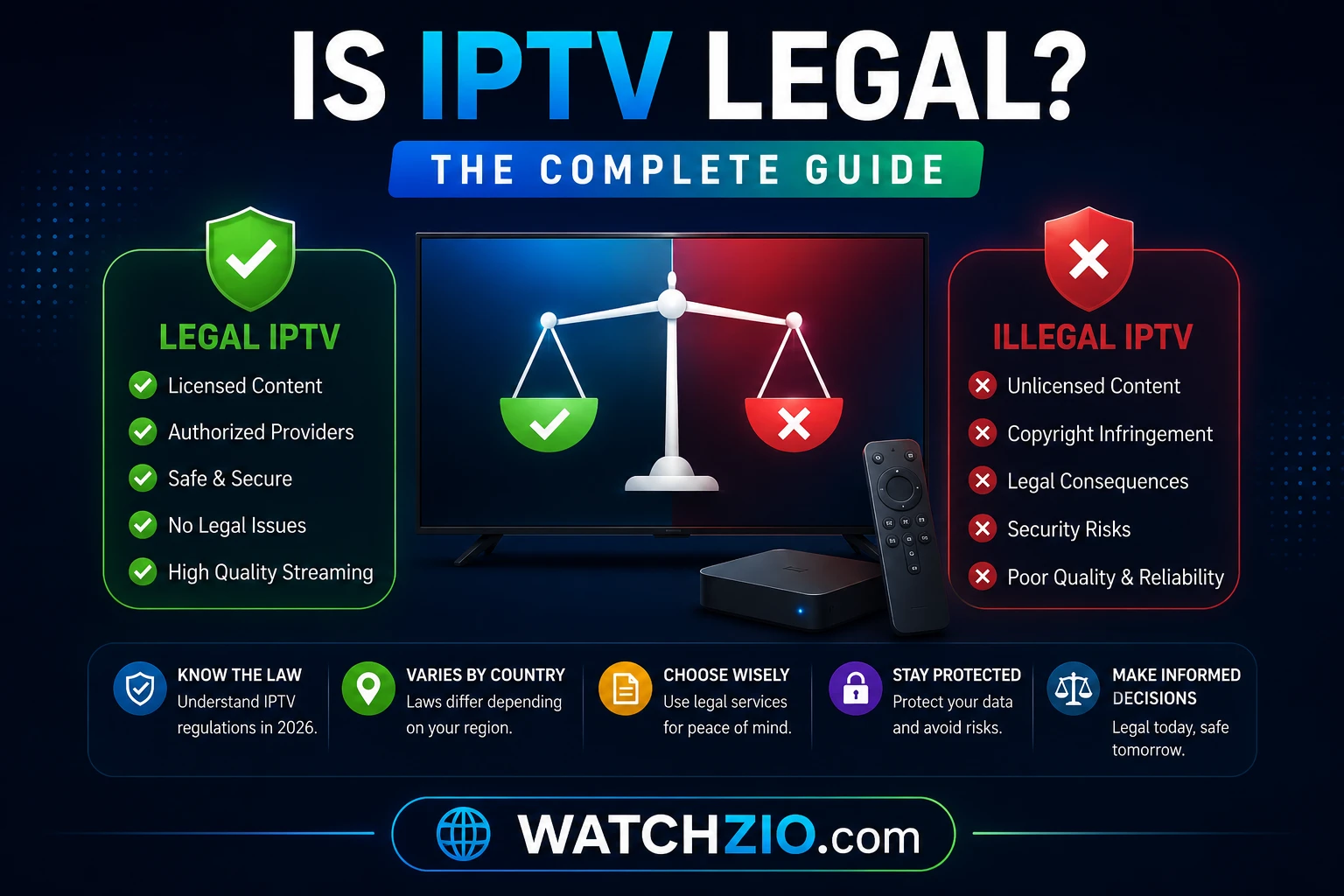
Image: Is IPTV legal? Legal vs illegal IPTV services explained for 2026

Why Does Everyone Think IPTV Is Illegal?

The myth exists because of a specific category of service: third-party sellers offering thousands of premium channels — every sports package, every pay-per-view event, every international network — for a few dollars a month. Those offers spread through social media and word of mouth, and because so many of them turned out to be pirated, "IPTV" as a word absorbed the reputation of its worst offenders.

But the acronym itself just means Internet Protocol Television — video delivered over an internet connection instead of a cable line, satellite dish, or aerial antenna. That's it. It's the same underlying mechanism behind every major streaming platform on the market. The technology was never the problem.

What Actually Makes an IPTV Service Illegal

Picture a record shop. Selling music is legal. Selling bootleg copies without the rights holder's permission is not. The shop — the distribution mechanism — is fine either way. What matters is whether what's being sold inside is properly licensed.

IPTV works exactly the same way. The delivery method carries no legal weight at all; the legality of a given service depends entirely on whether it has secured the rights to the content it broadcasts. A provider that has paid for those rights operates like any licensed broadcaster. A provider that hasn't is functionally reselling stolen goods, regardless of how professional its app looks.

Red Flags of an Illegal IPTV Service

Once you know what to check, spotting the difference is usually straightforward:

SignalLegitimate ServiceWarning Sign
PricingFair market rateEvery channel on earth for the price of a coffee
Company detailsRegistered, verifiable, contactableAnonymous, no real address
Payment methodsCredit card, PayPal, standard processorsCryptocurrency only, no receipts
SupportReal team you can actually reachNone, or disappears when contacted
PoliciesClear Terms of Service, DMCA policy, refund policyNone published anywhere
App availabilityWorks with established, mainstream appsRequires sideloading unknown software

The single most reliable tell: content licensing costs real money. If a service can't explain how it affords every premium channel on the planet for a few dollars, the honest explanation is that it isn't paying for the rights at all.
Watch on any device — no cable needed

Start your free 24-hour trial. No credit card required.

Start Free Trial

Is It Risky for You, the Viewer?

Enforcement almost always targets the operators distributing illegal streams, not the people watching them — prosecutions of ordinary viewers are genuinely rare. But "rarely prosecuted" is a low bar, and it isn't the only risk on the table:

  • Malware: pirate apps live outside official app stores, and security researchers routinely find keyloggers and crypto-mining code bundled inside sideloaded builds.
  • ISP throttling: providers in many countries monitor for known piracy traffic and may throttle your connection or send a warning letter.
  • Zero reliability: illegal services get shut down by enforcement action without warning — often right before the event you were counting on watching.
  • No recourse: when an illegal service disappears, so does your money. There's no support desk to call.
Risks of illegal IPTV malware legal
Image: The hidden risks of illegal IPTV — malware, legal exposure, and no reliability

None of this requires a VPN or anonymous payment method to "fix" — that advice treats the symptom, not the cause. The actual fix is using a service that doesn't put you in this position in the first place.

How Watchzio Operates

Watchzio runs as a standard legal streaming business, not a workaround. Concretely, that means:

  • A registered company with public, verifiable contact details
  • A published Terms of Service, Privacy Policy, and DMCA policy
  • Standard payment processing — PayPal, credit card, regulated gateways
  • A real 24/7 support team reachable on WhatsApp and Telegram
  • A 7-day money-back guarantee on every plan
  • Transparent pricing with no hidden fees

Run any provider you're considering against that same list. If it can't check every box, that already tells you what you need to know.

For an authoritative reference on how copyright applies to streaming, see the U.S. Copyright Office. For the underlying technology itself, the Wikipedia overview of IPTV covers how it works and where it's used legitimately.

The Bottom Line

IPTV the technology was never illegal — content licensing is the entire question, and it's a question about the provider, not the acronym. Check for transparent pricing, a real company behind the service, and clear policies, and the legal picture takes care of itself.

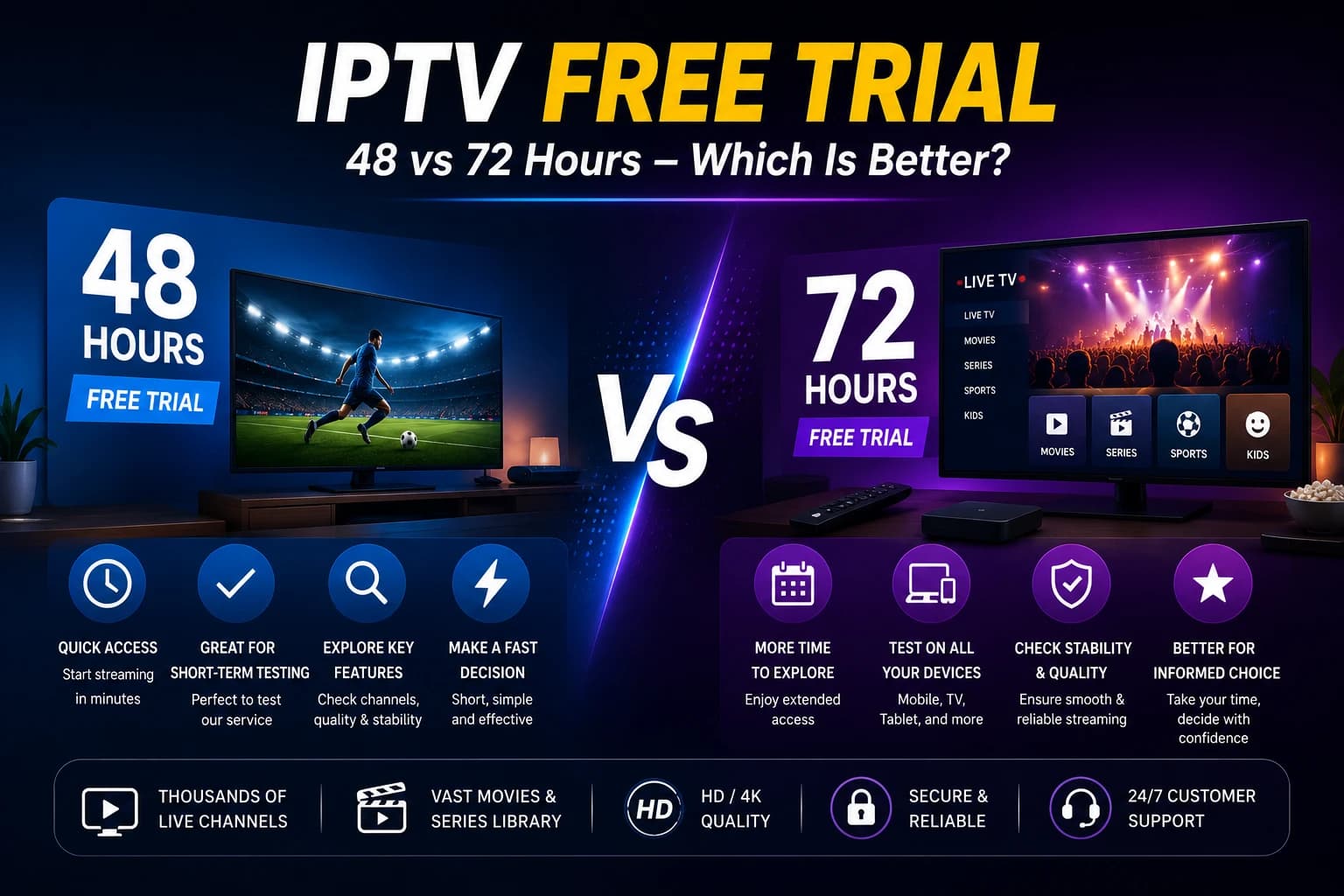
Watchzio checks every one of those boxes. Try it free for 24 hours — no credit card required. Wondering whether 24 hours is enough to judge a service? See our breakdown of 48-hour vs 72-hour IPTV trials, or go straight to our subscription plans.

Watch on any device — no cable needed

Start your free 24-hour trial. No credit card required.

Frequently Asked Questions

Is IPTV legal?
Yes. IPTV technology is completely legal — it is the same technology behind every major licensed streaming platform. Legality depends on whether the provider holds proper content licences. Services like Watchzio operate fully within the law.
How do I know if an IPTV service is legal?
Legal IPTV services have a registered company, transparent fair pricing, standard payment methods (credit card, PayPal), a real support team, and clear Terms of Service and refund policies. If a service offers everything for the price of a coffee with no contact details, it is not legal.
Can I get in trouble for watching IPTV?
Enforcement targets the operators who distribute illegal streams, not individual viewers. Prosecutions of ordinary viewers are extremely rare. However, using a legitimate provider eliminates the legal grey area entirely, along with the malware and reliability risks.
Is Watchzio a legal service?
Yes. Watchzio operates as a legal streaming service with a registered company, clear Terms of Service and DMCA policy, secure payment processing, 24/7 support, transparent pricing, and a 7-day money-back guarantee.
What are the risks of using illegal IPTV?
Illegal IPTV apps often contain malware, keyloggers, and crypto-mining code. Your ISP may issue warnings or throttle your connection. The services are unreliable and frequently shut down without warning — and when they vanish, your money goes with them.